
NTUNGAMO — Government has urged locals in the Mwerasandu tin mining area in Ntungamo District to comply with redevelopment plans under H5 Resources Company as investigations into land ownership continue.
Authorities said compensation concerns will be addressed using district valuation rates alongside a disturbance allowance, as tensions persist between residents and government over land rights and mineral development.
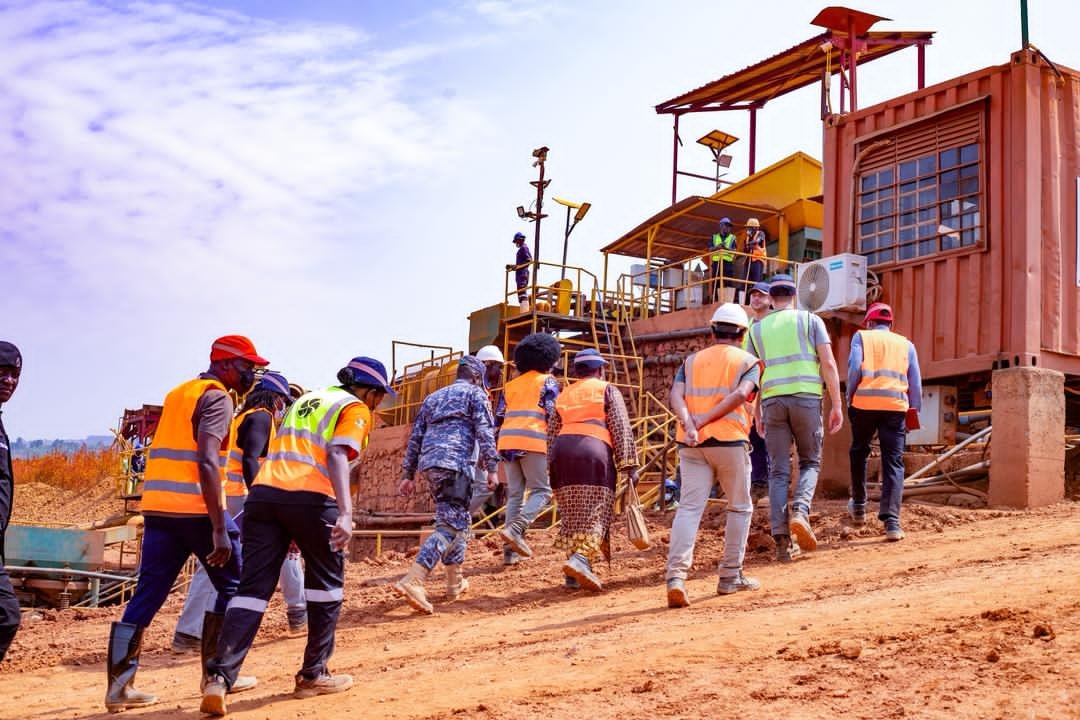
The Minister for Energy and Mineral Development, Monica Musenero, and the Minister of State for Minerals, Phiona Nyamutoro, inspected the Mwerasandu tin mine operated by H5 Resources to assess operations, redevelopment progress, and long-standing land rights and compensation concerns.
Phiona Nyamutoro praised the investor’s efforts, saying:
“I am pleased with the developments that the investor is progressing with in terms of adding value to tin as a mineral. Together as citizens of Uganda, we would love to see mineral developments that can benefit the country and the citizens.”
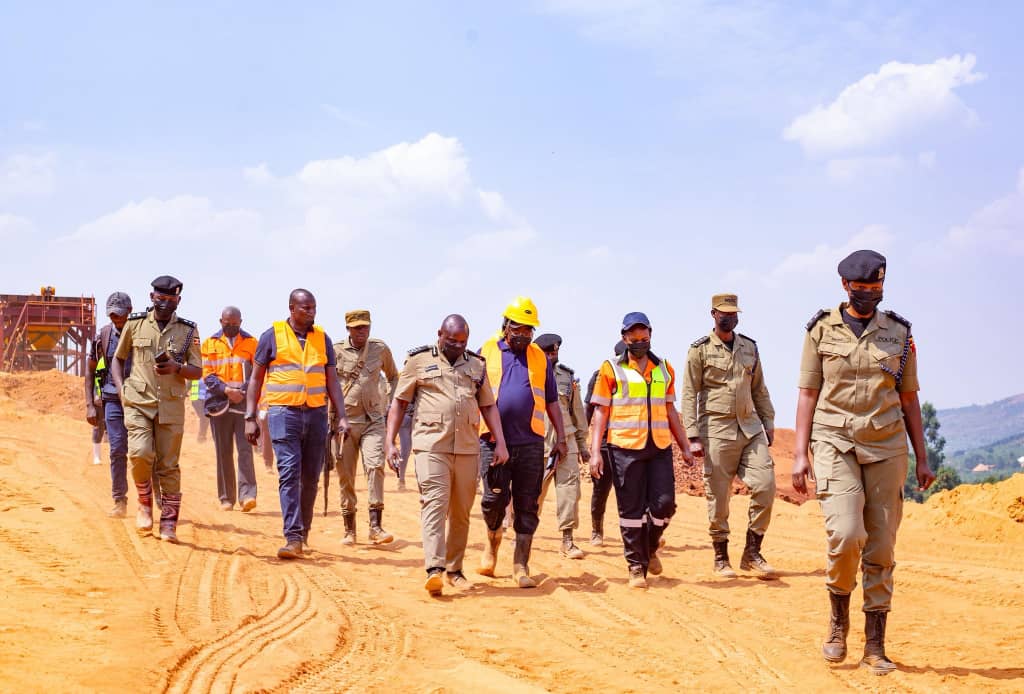
During the visit, officials engaged residents over the long-standing dispute, emphasizing government plans to redevelop the site for mineral value addition while ensuring order and compliance.
They urged locals to release land for expansion, redevelopment and job creation, reiterating President Museveni’s position that the land is government-owned while investigations continue.
Monica Musenero said: “Those with evidence should bring it to government. Government will decide on the real ownership of this land.”
Local residents, however, expressed grievances, insisting they are the rightful landowners and demanding full compensation not only for crops and developments, but also for the land itself, citing long-term occupation and historical claims.
One resident, Anthony Mugisha, the LC1 chairperson for Rwemizi Cell, said: “Our items are valued too low. They only count the crops on the land, however since the land is ours we also need the land to be compensated,” Mugisha said.
Another resident said the community’s claim dates back decades:
“When colonial miners left, our grandparents paid for this land at 3,000 shillings in 1971 and were given this land to do their work, with a receipt. That is why people are in this area. As local people we know that the land belongs to the people, not government,” the resident said.
Residents also raised concerns about livelihoods and employment opportunities. Rhoda Bamutungire said women in the area are seeking job opportunities:
“As women we also seek jobs. There are very many women here seeking an opportunity to work with the company.”
Benon Nkwatagye added that youth employment remains a key concern:
“We have learned children; they need employment.”
Government and community representatives agreed that compensation will follow district valuation rates, with disturbance allowances provided.
A community committee is expected to guide the process, with outstanding issues to be handled within 30 days.
Musenero further clarified the government position on compensation:
“We are going to use the district rates to compensate, plus a disturbance allowance. As of now this land belongs to government," Dr Musenero said.
"If it is proved that it belongs to the community, we shall discuss with the President. H5 is not going to negotiate with individuals. Those who don’t accept, we shall find where to place your money so that the company can continue as you sort yourselves out so that we don’t frustrate the investor.”
The area, which hosts over 1,000 artisanal miners, also saw officials caution against illegal smuggling and the export of raw minerals.
Musenero emphasized compliance with mining laws, saying:
“The laws of Uganda do not allow us to take minerals which are not processed outside the country. That is why there is a ban on export of unprocessed minerals, legally or illegally.”
